You're paying for every click. But if the landing page doesn't match the ad, the campaign, or the intent, that click is wasted. Foundry fixes the post-click gap automatically to lower your CPA and lift your conversion rate.
The post-click problem
Why clicks don't convert
You can't optimize your way out of a bad landing page experience with better bidding. These are the problems that live on the other side of the click.
The ad promises one thing, the page says something else. Visitors can't find the message that brought them there. Every mismatch is a bounce you paid for.
Ad campaigns iterate weekly. Landing pages don't. Within a month, your best-performing ad creative is pointing to a page that was written for a different angle.
A visitor from a "pricing" keyword needs different messaging than one from a "how it works" search. Sending both to the same generic page means neither gets what they need.
Traditional A/B testing needs thousands of visitors per variant. Most campaign landing pages don't have that traffic. So the page never improves, and your CPA stays flat.
How Foundry fixes it
Foundry connects to your Google Ads account, reads the campaign context on every visit, and adapts the page automatically. No new pages to build. No manual tests to run.
Foundry pulls keyword performance, campaign structure, and ad group context directly from your Google Ads account. The page knows which campaign sent each visitor and adapts the headline, body copy, and CTA to match the intent behind the click.
Each campaign gets its own messaging fork on one page. Visitors from your brand campaign see trust messaging. Visitors from your competitor campaign see differentiation. Same URL, different experience.
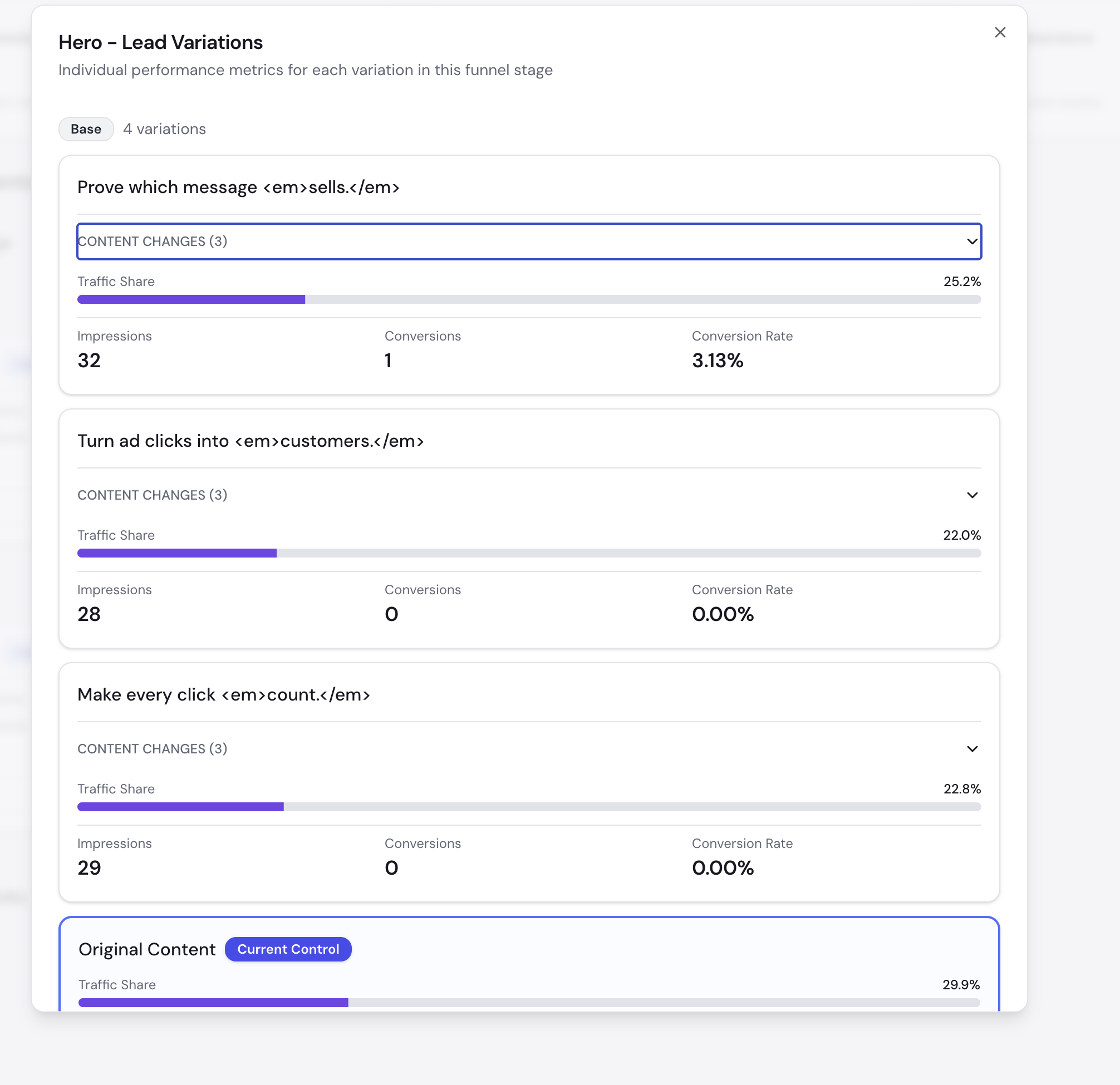
Instead of waiting weeks for A/B test significance, Foundry uses Thompson Sampling to shift traffic toward winners in real time. It reaches reliable conclusions with 50-75% fewer visitors than traditional tests.
Google rewards landing page relevance with better Quality Scores, which means lower CPCs and higher ad positions. When every visitor sees messaging that matches their search intent, relevance scores go up and your cost per click goes down.
Side by side
| Static landing pages | Foundry-optimized | |
|---|---|---|
| Message match | Same headline for every campaign | Per-campaign messaging from ad data |
| Testing method | Manual A/B tests (2-4/month if lucky) | Continuous Thompson Sampling, 24/7 |
| Traffic required | 5,000+ visitors per variant for significance | Works with 1,000+ monthly visitors |
| Quality Score impact | Generic relevance, one score for all | Higher relevance per keyword cluster |
| Page maintenance | Build new pages as campaigns change | One page adapts to every campaign |
| CPA trend | Flat or rising as competition increases | Decreasing as optimization compounds |
Getting started
Paste one snippet on your landing page, just like adding Google Analytics. Works on any platform: WordPress, Webflow, Unbounce, custom builds, everything.
See full setup guide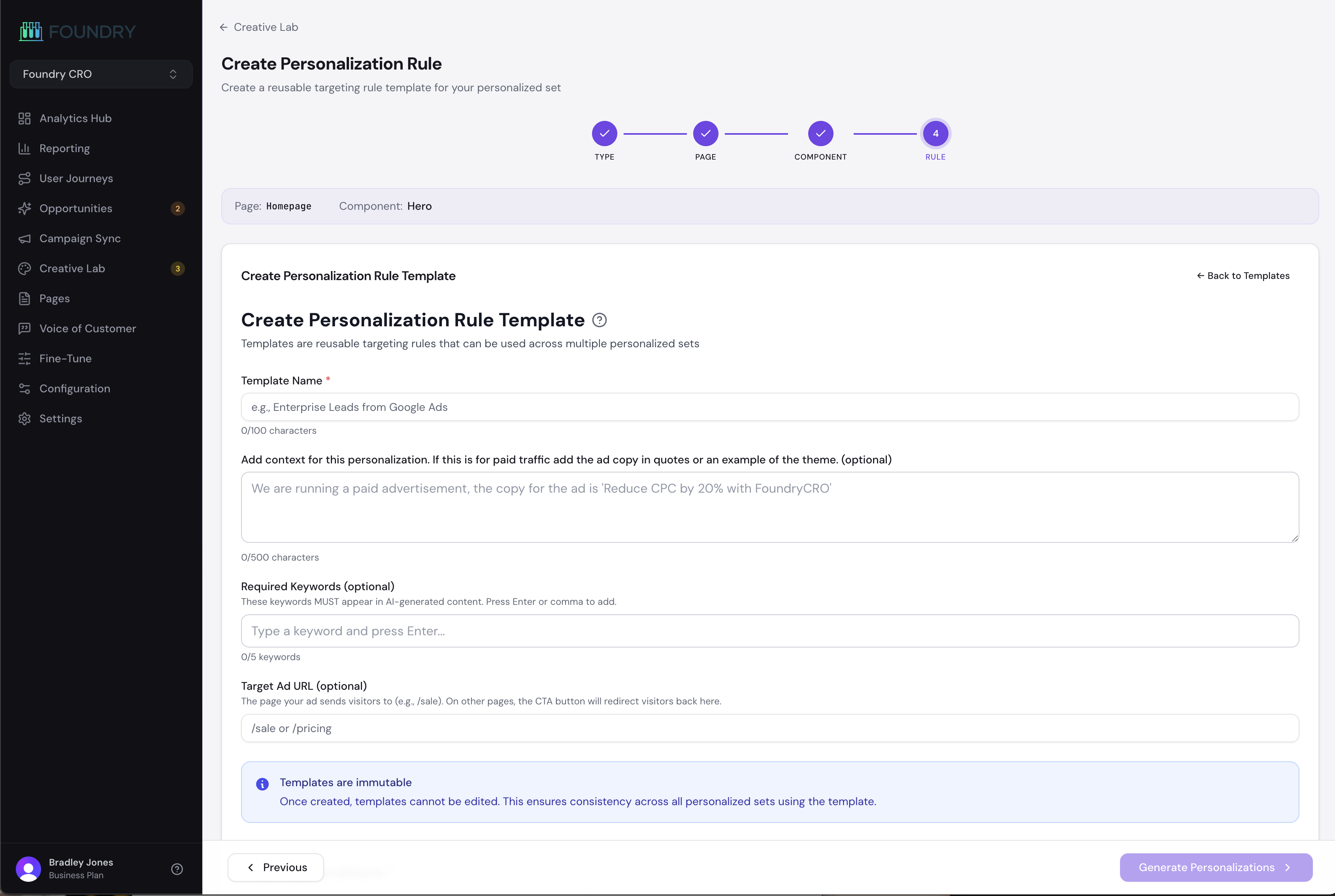
Link your campaigns so Foundry can read keyword performance, ad group structure, and campaign intent. The page starts generating messaging strategies tailored to each campaign fork.
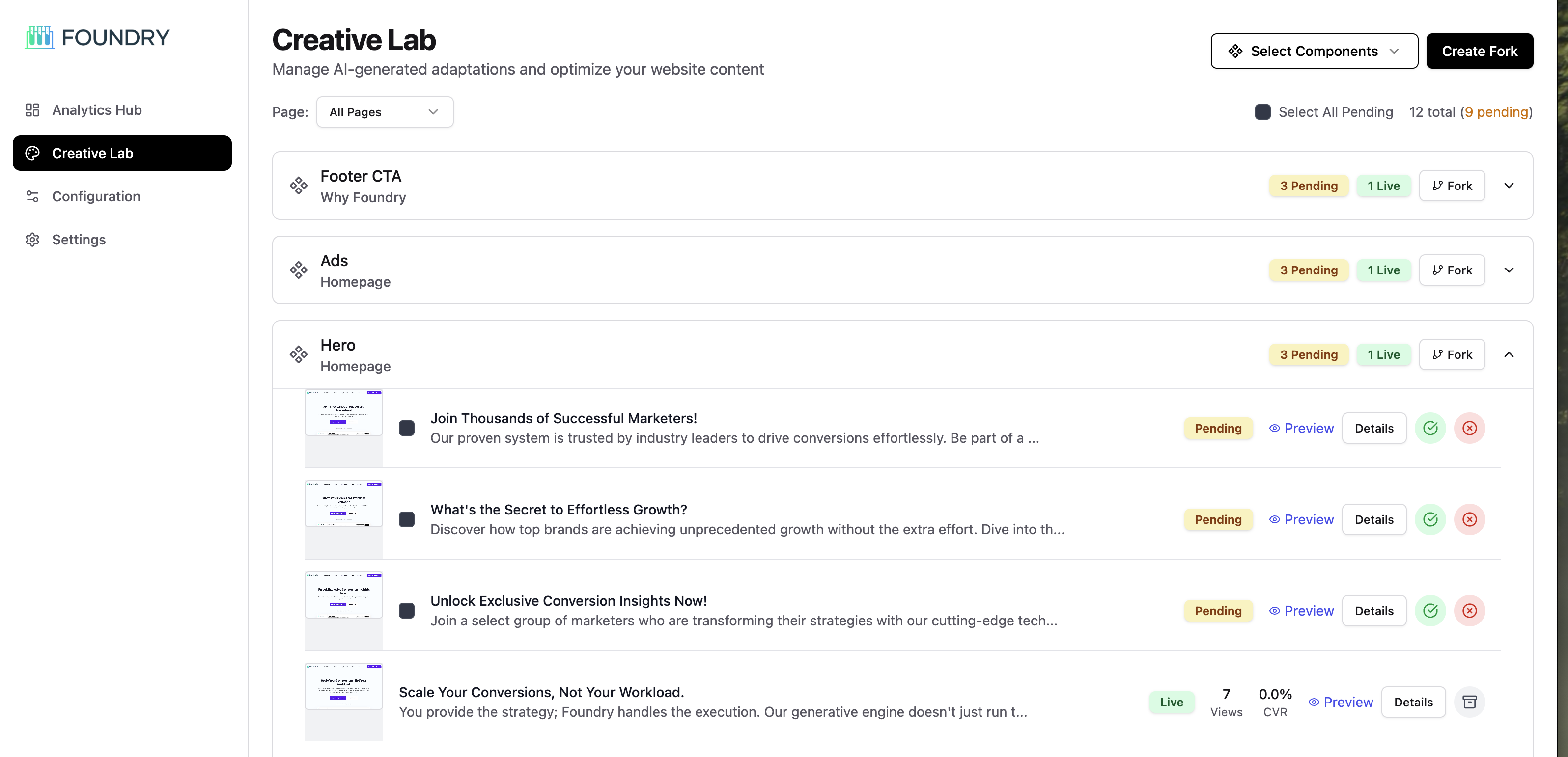
Approve the variant strategies Foundry generates. The optimization loop starts immediately: testing messaging, shifting traffic to winners, pruning losers, and surfacing insights back to your ad strategy.
We'll compare your landing page against the ads driving traffic to it and show you exactly where the message-match gaps are. 48-hour turnaround, no sales pitch, just the data.
No credit card. No obligation. We'll email your analysis within 48 hours.
Check your inbox within 48 hours for a personalized landing page analysis and recommendations.
Go deeper
Everything you need to fix the post-click gap and convert more of the traffic you're already paying for.
Page-side fixes for wasted ad spend, from message match to form friction.
The 2026 checklist for pages that match ad intent and convert.
Free diagnostic quiz to identify what's killing your conversion rate.
How landing page relevance directly lowers your CPC and CPA.
Why sending ad traffic to your homepage is the most expensive mistake in PPC.
Get more conversions from the same spend by fixing what happens after the click.
How to pipe Google Ads signals into your page for per-campaign personalization.
Lower your cost per acquisition by fixing the conversion side, not the media side.
Compare your conversion rate, CPC, and CPA against industry-specific benchmarks.
Common questions about landing page optimization for Google Ads campaigns.
Get a free analysisA lightweight script in your Google Ads account sends keyword performance data (CTR, impressions, click volume) directly to Foundry. The system uses this to understand which search intent is driving traffic right now, then generates landing page variations aligned with your best-performing keywords. It updates automatically as campaign data evolves, keeping your pages synced with your ads.
Yes. Quality Score includes a landing page experience component that rewards relevance. When visitors see messaging that matches their specific search query and campaign context, relevance scores improve. Higher Quality Scores mean lower CPCs and better ad positions, which directly lowers your CPA on Google Ads.
Two ways. First, higher conversion rates mean more conversions from the same spend. A 3% to 4% lift cuts CPA by 25% without touching your ad budget. Second, improved landing page relevance raises Quality Score, which lowers your CPC. The effects compound: lower cost per click plus higher conversion rate means dramatically lower cost per acquisition.
Foundry is built for PPC teams and managers who don't have a separate CRO team. It automates the variant generation, testing, and optimization that would otherwise require a dedicated specialist. Your PPC team manages the campaigns; Foundry handles the post-click optimization automatically.
Results vary by industry and starting conversion rate, but sites with campaign-adapted messaging typically see 15-40% relative lift over static pages. A page converting at 3% moving to 3.9% on the same traffic means 30% more conversions at the same ad spend. Check your industry benchmarks for context.
Foundry uses Thompson Sampling instead of traditional A/B testing, which reaches reliable conclusions with 50-75% fewer visitors. Sites with as few as 1,000 monthly visitors can see meaningful optimization. Higher traffic just means faster results.
No. Foundry only adapts content for visitors arriving with campaign context (UTM parameters, gclid, etc.). Organic visitors and Googlebot see your original page content. There's no cloaking risk and no impact on organic rankings.
Foundry starts at $249/month per site. Compare that to the cost of a single extra click on competitive keywords, where many advertisers pay $15-50 per click. If optimization converts just 5-10 additional visitors per month, it pays for itself and your CPA drops immediately.
Get a free ad-to-page match analysis. We'll show you exactly where your Google Ads traffic is leaking and what to fix.